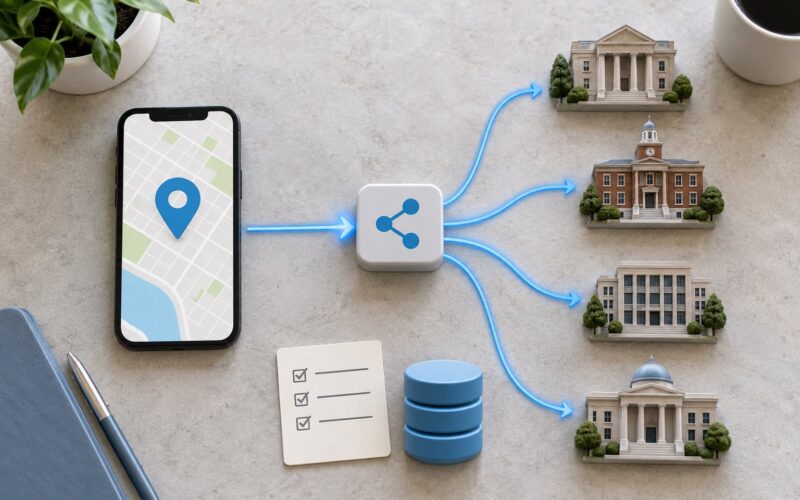
Short answer: how participatory budgeting works is that ordinary residents decide how to spend a defined portion of a public budget. A city rings-fences a small pot of money, opens it up to proposals, lets people vote, and then funds whatever wins. While every city tailors the details, the cycle is nearly always the same five stages.
- Setting the rules: the city states the budget, the boundaries, who may vote, and what kinds of spending can and cannot be decided this way.
- Gathering ideas: residents bring problems and rough ideas to neighborhood assemblies, workshops, or an online form, usually before anything is costed.
- Developing proposals: volunteers, budget delegates and city staff turn the popular ideas into written, costed, technically checked proposals that could actually be delivered.
- Voting: residents spend a budget, a set of points, or a simple approval on the shortlist, and an aggregation rule converts those choices into a funded list.
- Implementation and monitoring: winning projects move through design, permitting, procurement and construction, with public status updates until the work is finished.
The part people usually miss is stage five. A ballot result is a budget decision, not a finished building. I have watched city staff explain that distinction in very different ways, and the ones who publish implementation updates afterwards are the ones whose next cycle keeps people involved.
Table of Contents
- What Participatory Budgeting Is—and Why Cities Use It
- How the Participatory Budgeting Process Works
- How Participatory Budgeting Works From Proposal to Final Vote
- Who Can Participate and What Can Be Voted On?
- The Main Participatory Budgeting Models Cities Use
- How Much Money Is Usually Available?
- A Participatory Budgeting Cycle at a Glance
- How Cities Turn Winning Ideas into Funded Projects
- How Digital Tools Support Participatory Budgeting
- What a Participatory Budgeting Proposal Should Include
- Example: How a Neighborhood Project Moves from Idea to Funding
- How Cities Keep Participatory Budgeting Fair and Credible
- What Are the Limits and Common Criticisms?
- Frequently Asked Questions
- Does winning a participatory budget vote guarantee that a project will be funded?
- Can anyone submit a proposal for participatory budgeting?
- How is the participatory budgeting amount calculated?
- Is online voting safe and accessible for participatory budgeting?
- Can residents vote on any city expense they want?
- What to Do First
What Participatory Budgeting Is—and Why Cities Use It
Participatory budgeting is a form of citizen sourcing: a defined slice of public money is allocated by the people affected by it, rather than by officials alone. The pot is usually capital spending — parks, sidewalks, community centers, playground equipment, library and school improvements — because that money moves in blocks and finishes.
It is not a survey, a town hall, or a public comment period. Those collect opinions and staff publish a summary. In participatory budgeting, residents make the allocation, and the city is expected to carry it out within the rules that were published before voting opened.
Three purposes show up in almost every program: spending that reflects what residents actually need, more transparency about how discretionary money moves, and a visible test of whether government keeps its promises. Cities also use it deliberately to shift investment toward neighborhoods that historically received less, by reserving part of the pot for them.
How the Participatory Budgeting Process Works
How participatory budgeting works comes down to a fixed loop: rules, ideas, proposals, vote, delivery. The loop then restarts, usually each budget year, and the city publishes a short report between cycles so the previous round is not forgotten.
Two things are constant even when everything else varies. The rules come first and are written before anyone campaigns, and the money is real — a named amount that the city has already agreed to set aside rather than a vague promise to listen.
How Participatory Budgeting Works From Proposal to Final Vote
A resident’s idea travels through a fairly consistent path. First it is a problem, not a plan — a street nobody can cross with a stroller, an unlit path between two housing blocks, a playground with no shade.
At a neighborhood assembly or an online form, that problem gets written down and attached to a location. The city then checks whether the category is eligible at all, because many processes exclude anything involving salaries, staffing, debt service, or work already contracted.
Supporters collect signatures or start an online page. A steering committee — usually residents plus staff and sometimes a council member — reads the shortlist and asks supporters to answer the obvious question: what does this cost, and who maintains it afterward?
Technical staff then cost each surviving proposal and flag anything that cannot be delivered on municipal land, fails a permit requirement, or duplicates work already in the capital plan. Proposals that survive appear on the ballot with a realistic price attached.
During the voting window, residents support proposals using whichever ballot design their city chose. Once voting closes, results are certified, published, and handed to the budget office for the following steps.
Who Can Participate and What Can Be Voted On?
Eligibility rules vary more than any other part of the process, and this is where a first-time participant should look closest. Most programs require residency of some length, and a few require age as well: the common floor is 16, sometimes 12, sometimes tied to the voting age used for local elections.
Better programs go wider than the electoral roll. Cambridge has run youth processes with residents too young to vote elsewhere, and cities that exclude non-citizens draw strong criticism because people who pay rent and use the services are left out of the decisions about them.
Typical exclusions cover city staff salaries, debt service, contracted services, anything legally committed, and money the city cannot move within the fiscal year. Many also bar capital work inside private property or on land the municipality does not control.
Geographic units matter too. District-based processes split the pot by neighborhood or ward, which keeps small projects near voters, while citywide processes pool everything into one pot and tend to attract bigger-ticket items.
The Main Participatory Budgeting Models Cities Use
There are four mainstream shapes, and most cities mix two of them. District-based gives each neighborhood a share of the pot decided by the assembly in that area — the most common approach, and the easiest for a first-time participant to influence.
Citywide pools the whole amount, lets any resident propose, and funds the top projects regardless of location. It produces more visible projects and less local control. Thematic splits the pot by subject — parks here, mobility there — which suits cities where a single district cannot afford anything meaningful on its own.
Hybrid reserves a slice for neighborhood projects and the rest for citywide bids, which is the compromise most administrations settle on. Youth processes, university and campus budgets, and regional or provincial funds add another layer rather than a separate model.
One distinction cuts across all of them: deliberative processes discuss ideas in meetings before voting, while aggregative processes skip straight to a ballot. The evidence on PB outcomes leans toward the combination, where the assembly shapes the proposals and the vote settles the money.
How Much Money Is Usually Available?
Municipalities normally set the pot as a share of the coming year’s capital budget or as a per-resident figure, then publish both numbers before the cycle starts. Most sit well under one percent of total public spending. That sounds disappointing until you see it in context: the money is discretionary, so a small pot can still fund real projects quickly.
Scotland’s Community Empowerment Act 2015 commits local councils to a share of their spending being determined through participatory processes, and a £1.5 million fund in Northern Ireland drew 32 proposals that were split ten ways at £300 each. That is the small-pot model working exactly as intended: cheap, fast, and entirely deliverable.
At the other end, Paris has allocated on the order of €75 million in recent years, and New York City has spread roughly 24 million dollars across its council members’ districts. Cambridge, Massachusetts, has run a process that pulled in more than 1,300 ideas for a pot of about one million dollars. Czech municipalities, studied in 2018, put about 3.7 million euros through participatory channels, around 0.6% of total local expenditure.
Other levers change what a vote can buy: per-project ceilings, a hard cap on how much any single district may win, a minimum reserved for underserved areas, and a rule separating one-off capital from ongoing operating costs. A program that funds benches but not the labor to sweep them has designed a maintenance problem into its own rules.
A Participatory Budgeting Cycle at a Glance
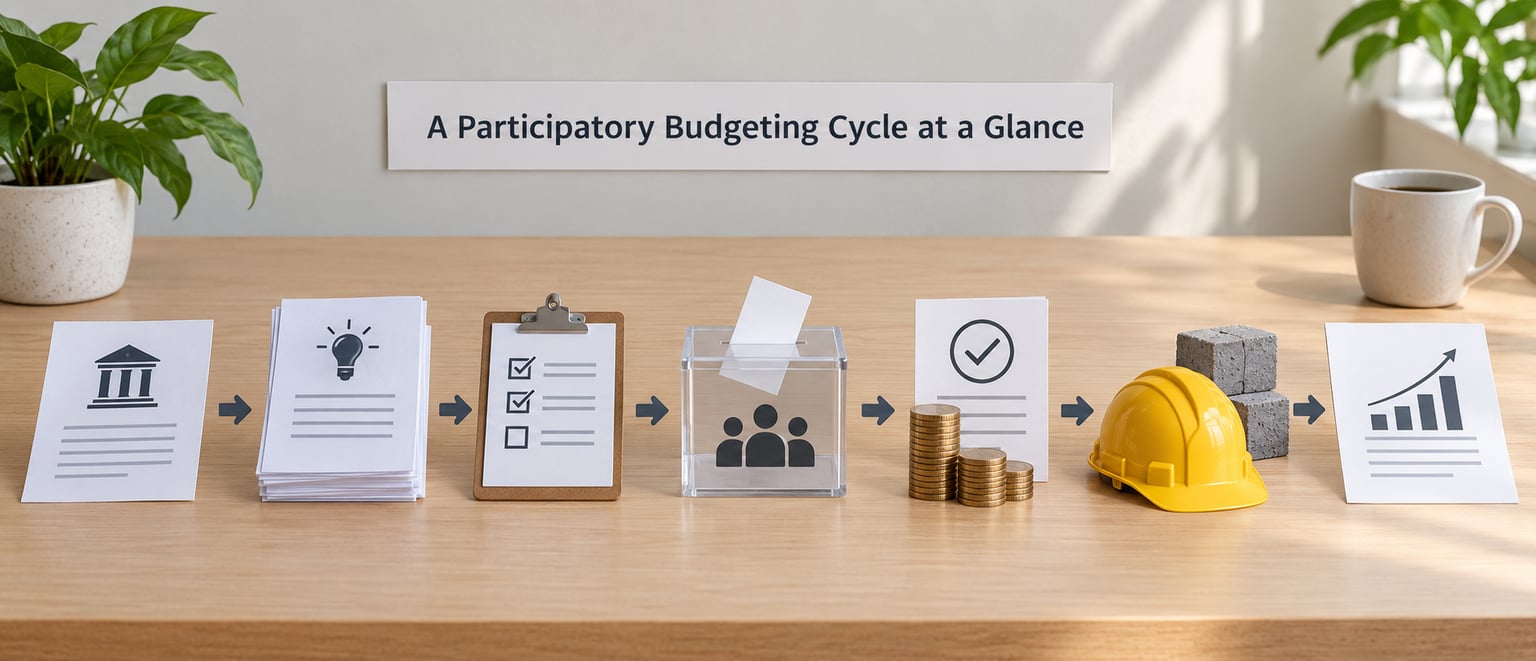
The table below is the version to keep on your screen while you read the rest. It maps each stage to who does the work, roughly when it happens, and what comes out of it.
| Stage | Who does the work | Typical timing | Public input | Output |
|---|---|---|---|---|
| Setting the rules | Budget office, steering committee | 2 to 4 months before the cycle | Public meeting on pot, units and eligibility | Published rulebook and budget amount |
| Gathering ideas | Residents, outreach groups | 3 to 6 weeks | Assemblies, workshops, online forms | Rough idea list with locations |
| Developing proposals | Budget delegates, city engineers and staff | 6 to 10 weeks | Supporters answer cost and feasibility questions | Costed, screened ballot proposals |
| Voting | All eligible residents | 2 to 4 weeks | Support, campaign, final ballot | Ranked or scored result |
| Implementation | Capital projects department | 6 months to 3 years | Status updates and site notices | Finished project and closing report |
How Cities Turn Winning Ideas into Funded Projects
The step nobody explains well is aggregation. Votes are not matched to projects one for one; they are combined and then solved against the money, and this is where the technical detail becomes interesting for anyone building the platform.
With a yes-or-no ballot, projects are ranked by yes votes and funded from the top until the pot runs out, subject to a rule that a project failing a minimum support threshold may never be funded even if money remains. With an allocate-a-budget ballot, each resident divides a fixed allowance across projects, and the software looks for the combination that reaches the most people within the limit.
That combination search is a version of the knapsack problem: pick the set of projects whose total cost fits the budget while maximizing total support. In practice a greedy or mixed-integer algorithm handles it, and the city publishes the rule in advance so nobody can claim the maths was rigged after the fact.
Real money rules also shape the outcome. A redistributive quota that reserves a fixed share for proposals benefiting underserved neighborhoods can override pure popularity; a district cap stops one well-organized area from taking the whole pot. Cities that use tie-breaking by cost per supporter get more projects funded from the same money, and they get a mix of small and large rather than a single expensive winner.
After certification, feasibility and legal review closes out: land ownership, permits, procurement route, and whether the estimate still holds. Some projects come back reduced in scope rather than dropped, and a good rulebook says in advance who has the final say. If money is left over, most processes carry it into the next cycle or return it to the general capital fund, and residents deserve to know which.
How Digital Tools Support Participatory Budgeting
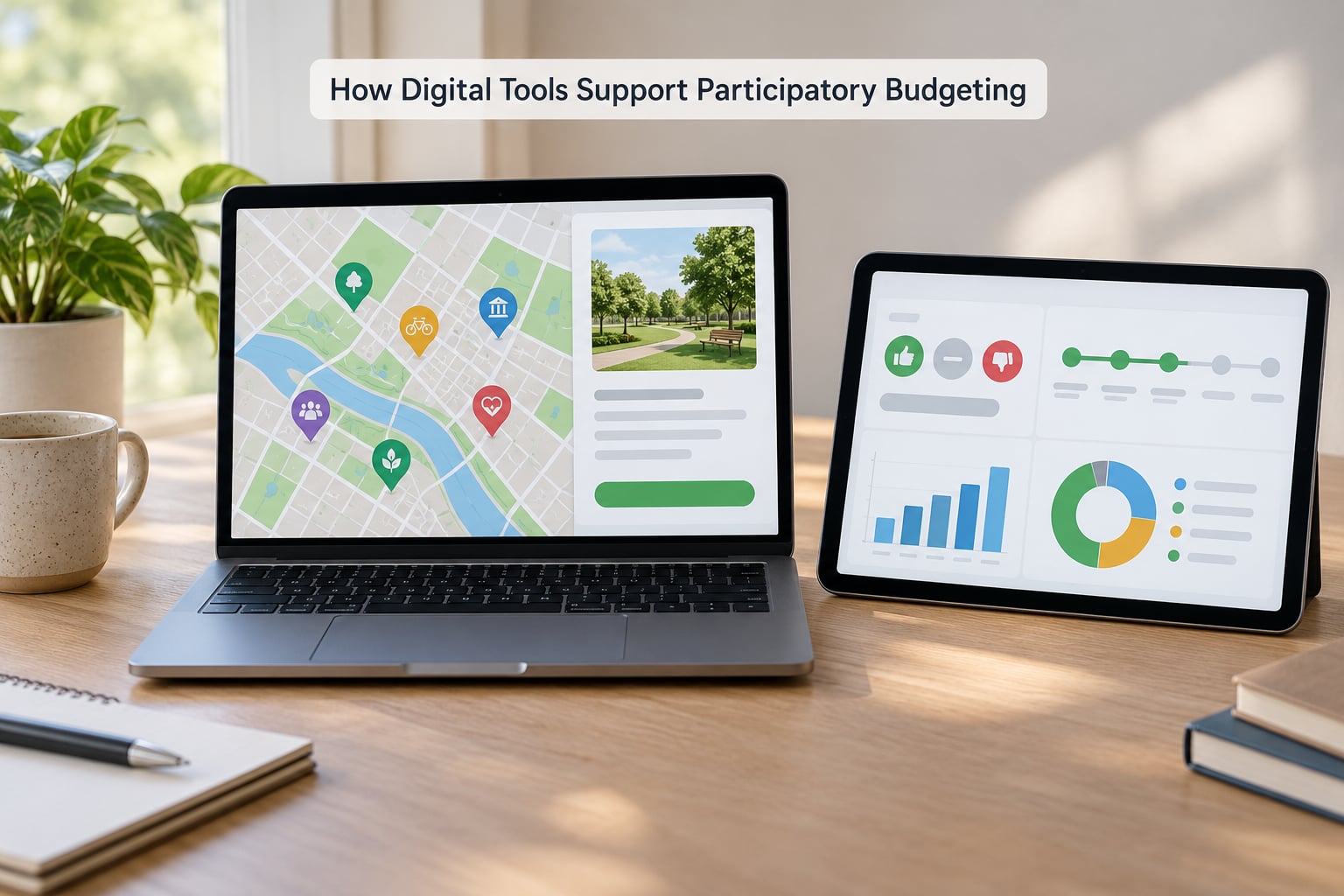
Software touches every stage of a modern cycle. Online forms replace paper collection, a map lets people attach an idea to the exact spot it belongs to, and automated checks flag proposals outside eligible districts before a human ever reads them.
The voting layer is the most consequential piece. Point allocation, budget allocation and ranked ballots all need an algorithm that behaves the same way for everyone, and it needs to handle thousands of simultaneous submissions without a visible lag. Notifications matter more than the interface: reminders at the start and end of the window move turnout far more than design tweaks.
Dashboards are where trust is won or lost. A public page showing every proposal, its status, its cost and its delivery date turns implementation from a black box into something residents can check. Open-data feeds let watchdogs and researchers query the same numbers the city publishes.
The risks are real, too. Online voting skews the demographic profile toward younger, wealthier, more educated voters, so a digital-only process can quietly shrink representation even as it grows raw numbers. Rio Grande do Sul saw turnout rise by about 8.2% after adding an online channel, without a systematic difference in what people chose.
Accessibility work is not optional: the form must work on an older phone, with a screen reader, in the languages the neighborhood actually speaks. And a proposal system that publishes the names and addresses of supporters hands a map to anyone who wants to pressure them. Vote tallies should stay anonymous, and support lists should show a count rather than a roll.
What a Participatory Budgeting Proposal Should Include
A proposal that survives review usually answers these questions in order:
- The problem, in one paragraph: who has it, how often, and what it costs them today.
- The proposed solution: a physical description, not a slogan, with quantities — how many lights, how many meters of path, how many units.
- The exact location: a specific site, parcel or street segment, with the reason that site was chosen.
- Who benefits: residents, users, ages, and any group the city has an equity commitment to.
- A cost estimate: an order-of-magnitude figure is enough at the idea stage; be honest if you do not have one.
- Evidence of support: signatures, a petition, a neighborhood vote, or an existing group willing to steward it.
- The maintenance consequence: who cleans, repairs and inspects it, and which department would carry that cost.
- A rough timeline: whether the work needs land, permits or utility work, and whether it fits the fiscal year.
- Legal and technical feasibility: ownership of the site, any regulatory hurdle, and why it is not already in the capital plan.
Worst of all is a proposal residents cannot cost. When favorite projects win without anyone knowing their price, the ballot fills with ideas no city could deliver.
Example: How a Neighborhood Project Moves from Idea to Funding
Picture a district where two housing blocks sit 400 meters apart with only a lit main road between them. Children on one side walk to school the long way, and older residents avoid the route after dark.
At the first assembly, the problem is written on a card with a rough location. Over the next two weeks it gathers more signatures than any other idea in that district’s share, so it becomes one of the proposals developed in detail.
Staff cost it two ways: a new shared path, or a cheaper crossing upgrade with lighting. The path needs land the municipality does not own, so it fails eligibility and comes back to the group. The team revises within the rules and takes the crossing option, adding two lighting columns to the description.
That version appears on the district ballot with its price printed next to it. Two other proposals in the same share cost more per supporter, so the rule that ranks by support per unit of money puts the crossing first. It fits the district ceiling with room for a second, smaller project, which also wins.
Six months later the city posts a status page showing design complete, utility coordination pending. That page is the difference between a process residents trust and one they start to doubt, and it costs a municipality almost nothing to maintain.
How Cities Keep Participatory Budgeting Fair and Credible
Credibility rules are written before the first vote, not added after a dispute. The essentials are a published rulebook, a named steering committee with a public roster, and a statement of whether the result binds the council.
Conflict-of-interest controls matter more than most people expect. Supporters who sit on the committee reviewing proposals should step out of those discussions, and the register of who declared a conflict should be visible.
Vote counts, tie-breaking rules, and the aggregation formula should be published and then applied without amendment. Appeals need a route and a deadline — usually a short window for alleging an error in eligibility or process, not a route to re-run a result you dislike.
Independent checks help: an audit of the ballot, an outside observer at the assemblies, and published minutes. Some cities run anti-gaming rules too, limiting bulk registrations, requiring one address to one vote, and flagging coordinated campaign activity without banning it outright.
Post-cycle reporting is the underrated part. Publishing which projects were funded, which were dropped, what each cost, and where the work stands six months later is what separates a program that survives from one that gets suspended when political support wobbles, as Porto Alegre’s did by 2017 after decades of high participation.
What Are the Limits and Common Criticisms?
The most common criticism is not about democracy, it is about scale. A pot under one percent of spending can look like participation while changing very little, and residents who vote for something and see nothing built stop trusting the process. The Open Government Partnership’s read is blunt: PB tends to work when there is strong government backing, adequate resources, and organized civil society, and when one of the three is missing the pot rarely buys more than symbols.
Turnout is frequently worse than reported. Some German processes drew about 0.1% of residents, and Chicago’s cycles in 2012 and 2014 reached between 1% and 3%. Numbers that small let a single organized faction decide outcomes, which is the clientelism problem: a locally unpopular project wins because its backers showed up, or a popular one loses because nobody did.
Participation skews toward the engaged, the older, and the homeowners. Online voting widens the net but pulls in a different skew, and neither channel reliably reaches renters, shift workers, or residents who do not read the local paper.
Then there is the execution gap, which researchers describe as the least studied part of the process. Attention concentrates on the assembly and the ballot, while the departments that actually control timelines, permits and contracts make thousands of small decisions afterward. A 2022 systematic review of the literature found this shift of real authority from participants to bureaucratic actors largely unexamined, which is why residents describe projects that were “funded on paper” and then quietly stalled.
Finally, winning a vote rarely gives residents authority over the rest of government spending. Salaries, debt service and contracted services sit outside the process entirely, and in most jurisdictions the result is advisory until the council adopts the budget formally. That distinction is the first thing a well-run program states plainly.
Frequently Asked Questions
Does winning a participatory budget vote guarantee that a project will be funded?
Not always, and the difference is worth checking before you vote. In some jurisdictions the result legally binds the council to include the projects in the adopted budget. In others it is advisory, so the council can alter or decline a winning project. Well-run programs publish which case applies before voting opens, alongside the rule for what happens when a project turns out to be too costly after the ballot.
Can anyone submit a proposal for participatory budgeting?
Usually anyone who meets the published eligibility rules, which commonly means living in the area for a stated period and being at least a minimum age. Plenty of cities set that age at 16 or younger, and some run dedicated youth processes. A few require citizenship or registration on the electoral roll, which is one of the most criticised design choices because renters and non-citizen residents are left out.
How is the participatory budgeting amount calculated?
Cities pick one of two methods. Some set a flat share of the coming year capital budget, which moves with the municipality’s finances. Others fix an amount per resident, which keeps projects at a similar scale across districts regardless of population. Either way the figure should be published before the cycle starts, along with per-project ceilings, district caps and any share reserved for underserved areas.
Is online voting safe and accessible for participatory budgeting?
It can be, and most cities now offer it alongside in-person voting, but it depends on the implementation. Safe means unique voter verification without publishing who voted for what, clear audit of the count, and working paper and phone options. Accessible means the site loads on an older handset, works with a screen reader, and is available in the languages residents speak, with in-person voting kept open as an alternative.
Can residents vote on any city expense they want?
No, and the exclusions are usually wide. Most processes cover discretionary capital items only, which is why you see paths, playgrounds, benches and lighting on ballots. Salaries, staff costs, debt service, contracted services, anything already legally committed, and work on land the city does not own are typically ruled out before the cycle starts. The rulebook published at the start of the cycle is the authoritative answer.
What to Do First
Find your municipality’s process first. Search the city council site for the participatory budget name, and check whether the cycle is open, closed, or still in its rule-setting phase, because the same city often runs different processes for different pots.
Then read the rulebook, not the promotional page. You want three facts: how much money is in the pot, who is eligible to propose and vote, and whether the council is bound by the result.
Before you write anything, test your idea against eligibility yourself. Check the site ownership, the spending category and the fiscal year. Plenty of good proposals die on a technicality that took two minutes to check.
Submit one specific proposal with a real cost estimate, a named location and an honest maintenance plan. Support it transparently, in the open, without pressure on anyone who lives there. Then follow the implementation page after the vote, because that is where the accountability usually shows up.