A 311 system is how a city handles every non-emergency request a resident makes, in one place. Reports arrive by phone, web, app, text, and email, get a case number, get sorted and routed to the department that owns the problem, turn into a work order for a field crew, and stay open until someone closes the case. That is how a 311 system works behind the scenes, and most of it is invisible until something goes wrong.
What follows is the whole path, from the moment a resident hits submit to the moment a case gets archived, including the messy parts: duplicate submissions, jurisdiction gaps, and requests that get closed without anyone fixing anything.
Table of Contents
- What Is a 311 System?
- How a 311 Report Travels From Request to Resolution
- What Happens When Someone Submits a 311 Request?
- Phone, web, app, text, email, and third-party apps
- How a 311 System Works Behind the Scenes During Intake
- What the call-taker is actually doing
- How a 311 System Categorizes and Routes Reports
- How a 311 System Tracks Work and Communicates Updates
- Why a 311 request gets closed without a fix
- How a 311 System Connects to City Data and Teams
- How a 311 System Measures Performance
- How a 311 System Uses Data Responsibly
- What Happens When a 311 Report Is an Emergency?
- Frequently Asked Questions
- Is 311 the same thing as 911?
- Can anyone submit a 311 request?
- What information should a resident include in a 311 report?
- How long does a 311 request usually take to resolve?
- Does every city use the same 311 software?
- Why might a 311 request be closed or rejected?
What Is a 311 System?
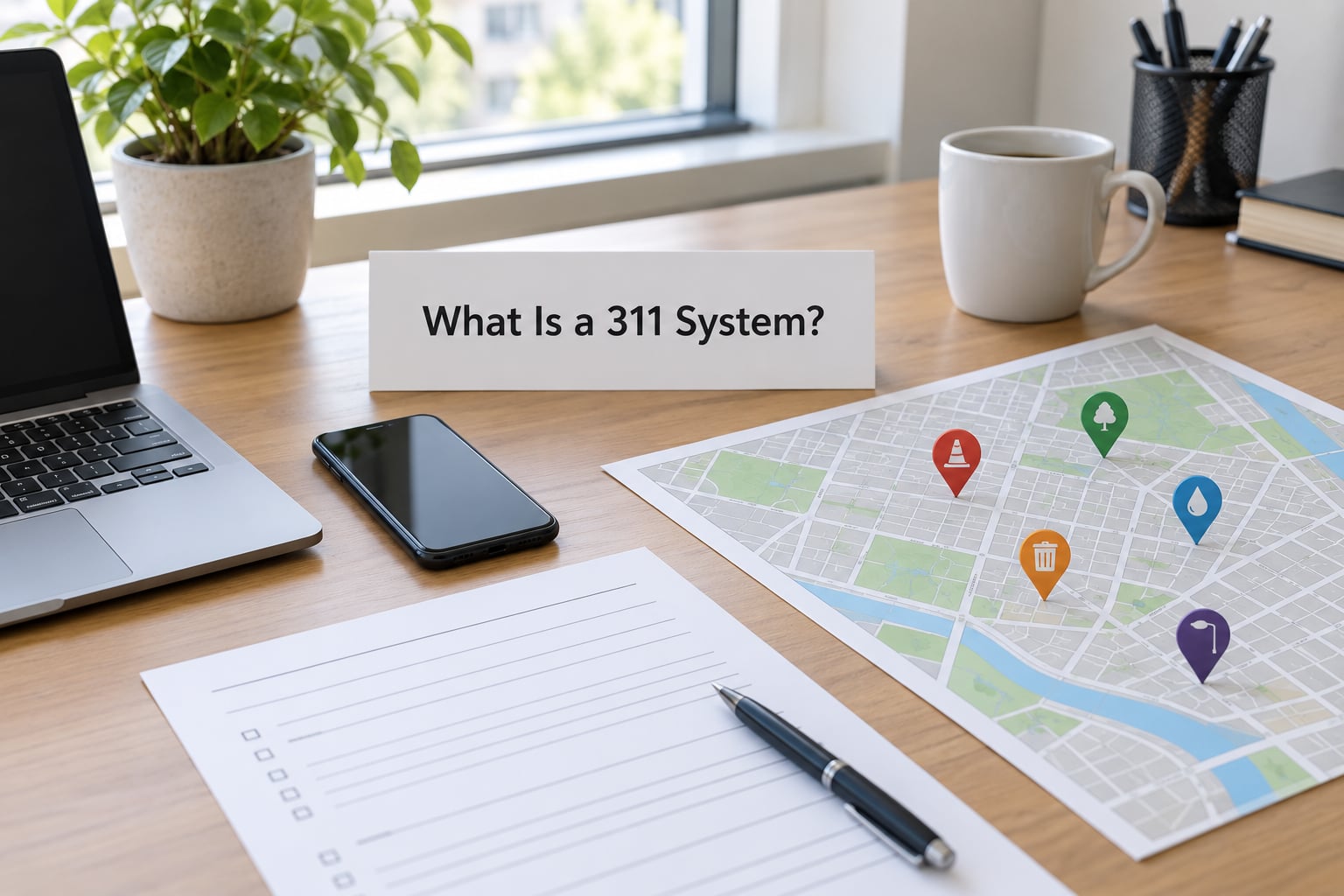
A 311 system is a city’s central service line and request-tracking platform for non-emergency issues: potholes, missed trash, graffiti, illegal dumping, streetlight outages, stray animals, noise, and code violations. Intake feeds a case management system that assigns each report a unique number, routes it to the responsible department, issues a work order, and tracks it to closure.
The number itself is a routing convention, not a magic hotline. If your city does not run one, you call the public works department or use a web form instead. Coverage is municipal, and it changes at city and county lines, which is exactly where a lot of requests stall.
Scale is the part people underestimate. New York City’s 311 service peaked near 200,000 calls a day during the pandemic, against roughly 25,000 a day for 911 in the same city, per Govtech’s reporting in 2020. Charlotte’s combined 311 line handles more than a million calls a year, and about 45 percent of them relate to Charlotte Water, according to the Charlotte Water blog.
That last number is a good illustration of how the request mix differs from the popular imagination. A lot of 311 volume is utility questions, not potholes.
| Channel | What it is for | If you use it for the wrong thing |
|---|---|---|
| 911 | Any situation where someone could be hurt: fire, crime in progress, a medical emergency, a gas leak you can smell | Nothing to add here, but a delay costs minutes that matter |
| 311 | Non-emergency city services and non-emergency city government questions | A life-safety report sent to 311 waits for a human to spot it and hand it over |
| 211 | Referrals to community and social services, not road or infrastructure problems | You get a referral list instead of a repair |
| City hall or a department line | Billing disputes, permits, records requests, anything needing a named employee | You wait on hold, because the person answering is not the crew that fixes things |
How a 311 Report Travels From Request to Resolution
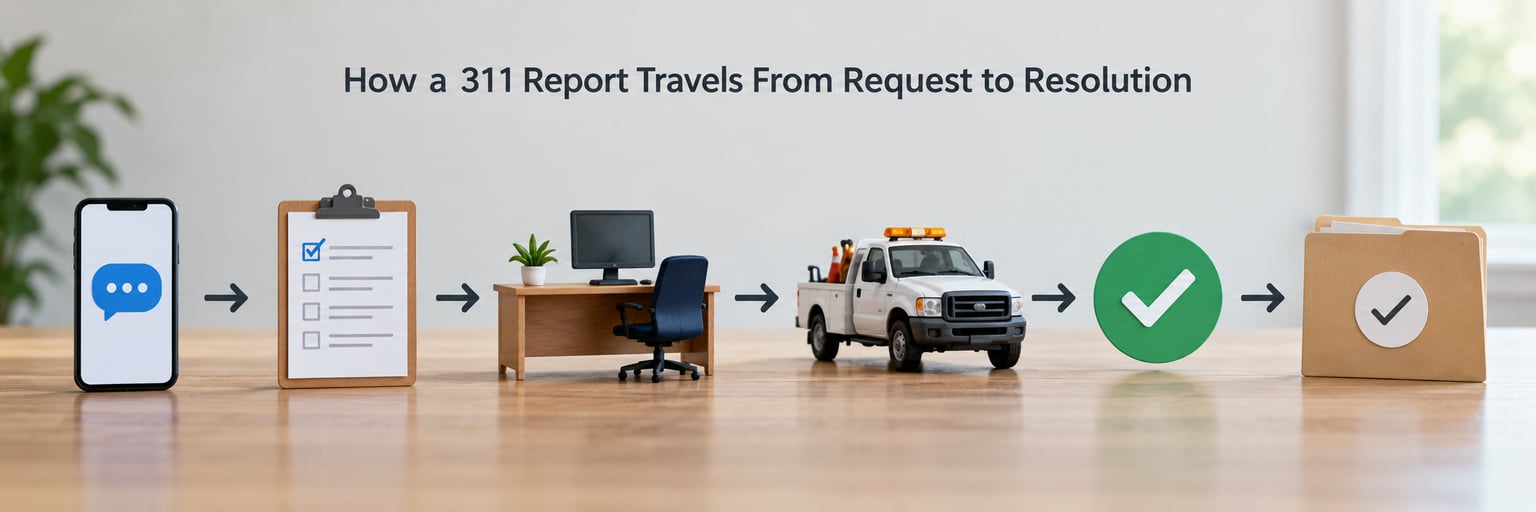
Every city runs the same eight-stage lifecycle, even when the software and the names differ. This is the single most useful thing to understand about how a 311 system works behind the scenes.
| Stage | Who owns it | What the resident sees |
|---|---|---|
| 1. Intake | Web portal, app, call center, or automated channel | The form or the call connects |
| 2. Capture and validation | Call-taker or rules engine | A case number is read back |
| 3. Categorization | Taxonomy plus service codes | A category on the receipt |
| 4. Routing and assignment | Rules, jurisdiction checks, sometimes a dispatcher | Usually nothing at all |
| 5. Work order | The owning department, in its own work order system | A status change to assigned or scheduled |
| 6. Field work | A crew or a contractor | In progress, sometimes with a date window |
| 7. Verification and close-out | Supervisor, inspector, or resident confirmation | Resolved or closed |
| 8. Follow-up | Reopen, appeal, or archive | A reopened case number, or silence |
Two of those stages are where trust is won or lost. Stage 4 is invisible, so a request that fails a jurisdiction check just sits. Stage 7 is where a supervisor decides whether the work was actually done, and that decision is what residents argue about.
What Happens When Someone Submits a 311 Request?
Intake is the layer residents touch, and it varies more than the rest of the system. Most cities run six channels at once.
Phone, web, app, text, email, and third-party apps
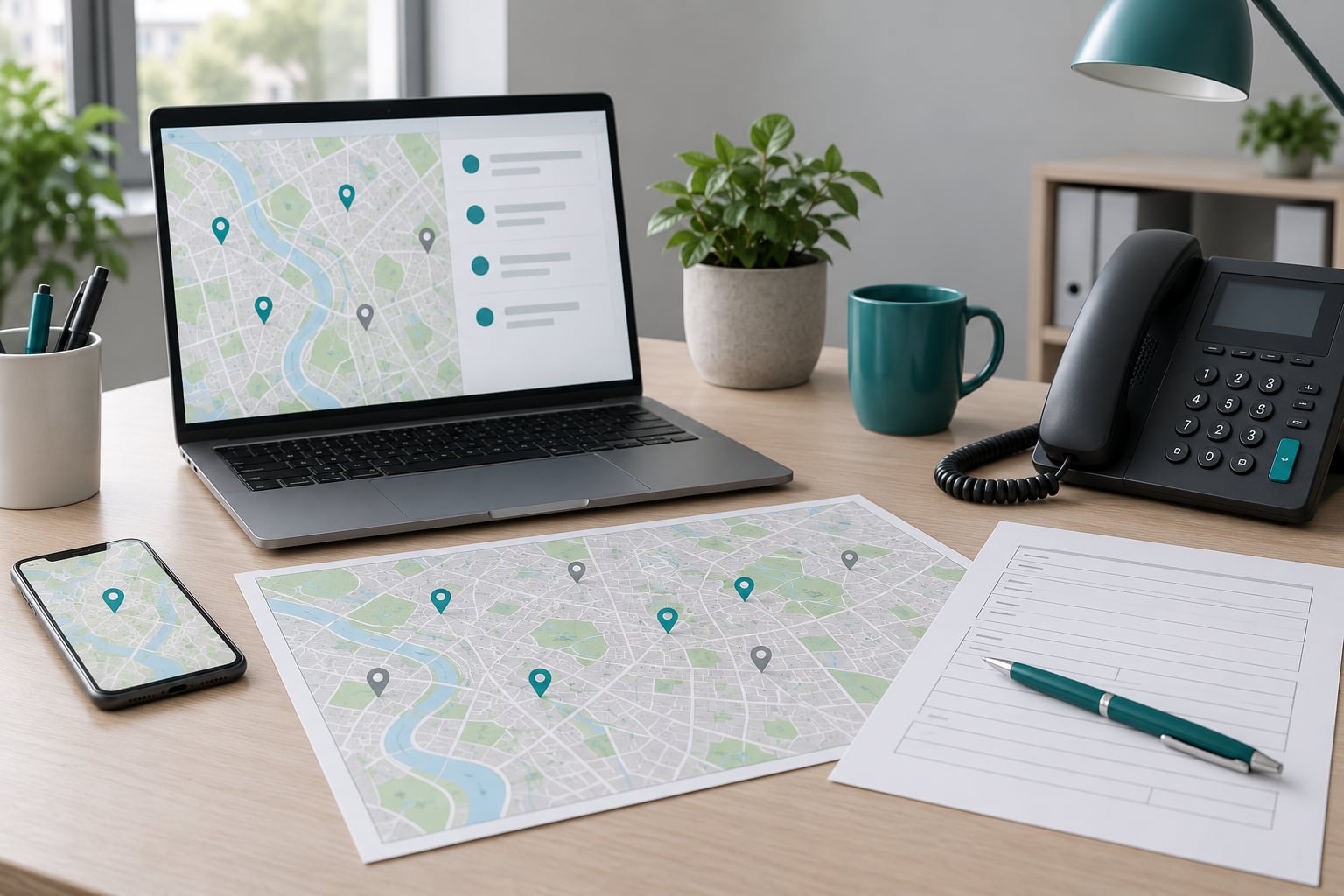
A phone call reaches a call center, where an interactive voice response tree can handle simple things like hours and department transfers before a person picks up. Web and app submissions skip the queue entirely, which is why cities push the app hard. SMS gets you a link and little else, but it works on an old handset. Email and social accounts get monitored, though a municipal social team is usually a small group of people working a queue. Third-party reporting apps plug in as extra front ends over the same backend.
How a 311 System Works Behind the Scenes During Intake
Whichever channel someone uses, the system is collecting the same five things: what the problem is, exactly where it is, when it started, a contact method, and evidence. Location is the piece people get wrong most often, so good intake tools geocode the address, snap a point on a map for the resident to confirm, and reject anything outside the service area with a message pointing at the right agency. Photos and video get attached and stored against the case, sometimes with automatic redaction of faces and plates before they are visible to the public. Authentication is optional in most cities, but when a portal asks for an account it can track repeat reports, show a personal dashboard, and cut duplicate noise. Duplicate prevention works by checking open cases nearby in the same category within a time window, then either linking the new submission to the existing case or creating a genuinely new one.
What the call-taker is actually doing
On the phone, a customer service representative is doing triage while typing. They confirm the address, pick the service code, check the knowledge base for anything unusual about that address, and log the case before the caller hangs up. The training pipeline behind that job is longer than most people expect: Charlotte’s program runs 12 to 14 weeks of classroom time followed by a 60-day supervised nesting pod on the floor with a live queue. Staff also split into generalists, who handle the broad mix, and specialists, who handle billing-heavy work like utilities and taxes.
How a 311 System Categorizes and Routes Reports
Roughly speaking, routing is a rules engine with a human override. Every city maintains a taxonomy, a tree of service request types, and each leaf of that tree carries a service code bound to a department, a district, and a set of handling instructions.
Incoming text hits keyword and pattern matching, and the address resolves through geocoding to a service area, which tells the system which office owns it. Rules then assign the case. A pothole in a city right-of-way goes to public works, a pothole on a state highway gets flagged for a transfer, and anything that looks like a life-safety issue trips an escalation rule. Where a category is ambiguous, the case goes to a human queue for triage, and that queue is a genuine bottleneck in most systems.
Machine learning is moving into this step. Auto-categorization from the description text, auto-acknowledgment messages, and chatbots that resolve simple questions without a case are all in production somewhere now. The pattern is consistent: the system handles the high-volume predictable categories, and everything uncertain still goes to a person.
| Common request category | Usually owned by |
|---|---|
| Potholes, road damage, curb damage | Public works, street maintenance |
| Missed trash, illegal dumping | Sanitation, code enforcement |
| Graffiti | Public works or a contracted cleaning team |
| Streetlight and signal outages | Public works, signals division |
| Abandoned vehicles | Code enforcement, parking, sometimes police towing |
| Stray animals | Animal control |
| Noise and nuisance complaints | Code enforcement, police non-emergency line |
| Water bills and utility questions | The city water utility |
| Snow and ice on sidewalks | Code enforcement, with fines in some cities |
How a 311 System Tracks Work and Communicates Updates
Every case carries an identifier, usually an alphanumeric case number, and that number is the thread running through every update. Status transitions are the public face of the system: open, assigned, in progress, resolved, closed, and reopened.
Notifications go out when a case changes state, by text, email, or push, depending on what the resident supplied at intake. Many portals also let the resident add comments and photos to an open case, which matters more than it sounds, because a resident update is often the fastest way a crew learns the problem is worse than the ticket says.
Why a 311 request gets closed without a fix
This is the loudest complaint theme in resident-facing coverage, and there are usually a specific reason behind it. A duplicate got merged into an older case that was already fixed. A crew marked it resolved but nothing changed, and nobody re-inspected. Jurisdiction boundaries put the work outside the city’s authority, so the case was closed as referred. A supervisor decided the condition did not meet the repair threshold, for example a pothole below a size standard. Or the resident simply never saw the notification and thought the case had been ignored.
The mechanics that make this worse are worth knowing. A merged duplicate can be invisible to the person who filed it. A case closed on paper rather than on site is a real practice, and the escalation path usually runs through a supervisor review or a quality audit rather than an automatic recheck. The practical move is to respond to the close-out notice with a comment and a fresh photo, which restarts the clock in most systems instead of forcing you to start from scratch.
How a 311 System Connects to City Data and Teams
Here is the layer that matters if you are building or evaluating civic software. A 311 platform is rarely one product. It is a stack with an API surface.
- Intake layer: web portal, mobile app, IVR, SMS gateway, and third-party connectors, all writing to the same case model.
- Citizen relationship management core: the case record, the taxonomy, the routing rules, the resident history, and the reporting dashboards. This is the part cities buy or build, and it is the part most vendors call a citizen request management system.
- Work order management: the owning department’s own system, often enterprise software the IT department already runs. The 311 platform triggers a work order there and receives status back.
- GIS and asset inventory: street segments, poles, hydrants, signal cabinets, and tree inventories. This is what makes a maintenance history possible, and what lets a city group repeat reports on the same asset.
- Payments and licensing: the portal that takes a fee for a bulky-item pickup or a parking permit and writes the receipt back to the case.
- Open data feeds: a public export of requests, usually stripped of personal information, refreshed on a schedule. Civic hackers use these feeds heavily, and knowing what gets published is worth understanding before you build on them.
For developers, the practical questions are the unglamorous ones: is the export API stable, what identifiers join to other city datasets, is there a rate limit, and how current is the feed. Open data is where this audience gets real value, because 311 records are unusually honest about where a city’s services actually fail.
How a 311 System Measures Performance
Cities track 311 performance on a small set of numbers, and the same handful keeps coming up.
Response time is the gap between intake and a human or automated first reply. Resolution time is intake to close-out, and it is the number residents actually feel. Backlog is open cases divided by the crew capacity available to clear them, which is the only version of that figure that means anything. Closure quality measures resolved cases that were re-reported within a window, which is how cities catch crews marking work complete when nothing changed. Repeat reports on the same location point to either a bad repair or an asset that needs replacing. Channel mix tells a city whether moving residents to the app actually worked. Closure with no action is the metric that exposes paper closures, and cities that publish it tend to be the ones that fix the problem.
Volume trends get read as an early signal. Govtech reported that Austin’s 311 volume rose 11.8 percent in March 2020 against the same month a year earlier, and described city data staff watching call-type spikes in near real time. A sudden climb in one category on one block is a signal before any inspection would catch it.
One caution for anyone analyzing 311 data: the records describe requests, not conditions. An OpenNews investigation into Toronto’s Vision Zero data noted that 311 records do not reliably show whether a request was completed, so using them to measure real-world safety outcomes needs care.
How a 311 System Uses Data Responsibly
Location, contact details, and photos are the sensitive parts of a 311 record, and the governance around them varies a lot by city.
Public dashboards and open data exports usually remove names, exact addresses, and contact information, and often blur or drop photos. Some cities delay publication by days or weeks for that reason. What stays public is the category, the date, the general location, and the status history, which is usually enough for the analysis people want.
Bias shows up in the routing layer. Categories that get routed by keyword matching rather than by reported condition will be classified differently depending on how a request is worded, and neighborhoods with more active reporters produce denser request records whether or not conditions are worse there. Accessibility is the other live issue: phone-only service excludes people, and cities that push apps exclusively tend to lose them. Multilingual intake, text-based channels, and in-person reporting at service centers are the usual mitigations, and they are staffing decisions as much as technical ones. Retention rules matter too, since a case record can sit in a system for years with an address and a photo attached.
What Happens When a 311 Report Is an Emergency?
Every 311 system has a boundary, and the systems handle it in similar ways. Intake forms carry warnings on hazard categories. Automated phone prompts interrupt to redirect urgent reports. Routing rules flag suspected life-safety cases for immediate human review, and some cities connect 311 intake directly to dispatch as a backup path.
Take a gas odor. A resident who reports it to 311 will typically get a scripted instruction to leave the area and call 911 or the utility emergency line, and the case may be flagged anyway so someone can confirm the follow-up happened. A sinkhole opening under a road is similar: a 311 report can accelerate coordination, but it does not replace a dispatch call.
Reporting something life-threatening to the wrong channel is the expensive mistake. A request sitting in a non-emergency queue does not page anyone, and no amount of good categorization fixes that. If in doubt, 911 first, 311 after.
Frequently Asked Questions
Is 311 the same thing as 911?
No. 911 is for emergencies where someone could be hurt, such as a fire, a crime in progress, a medical emergency, or a gas leak you can smell. 311 is for non-emergency city services like potholes, missed trash, graffiti, and code violations. Reporting an emergency to 311 means it waits in a queue instead of reaching a dispatcher, so call 911 first whenever lives or property are at stake.
Can anyone submit a 311 request?
In most cities, yes. You do not need to be a resident, own the property, or explain who you are. Some departments do limit who can file certain complaints, such as disputes between neighbors, and some cities require an account for portal access if you want a personal dashboard. Anonymous reporting is widely available, though it limits your ability to track the case.
What information should a resident include in a 311 report?
Five things speed up resolution: what the problem is, exactly where it is, when it started, a working contact method, and evidence. A photo with a geotag is often the single most useful attachment, because it saves a crew a site visit just to find the location. Include the nearest cross street or house number if the map pin looks wrong, since intake staff geocode the address and confirm it with you.
How long does a 311 request usually take to resolve?
It depends entirely on the category. Bulk pickup and minor code issues are often resolved within days, while street maintenance and anything requiring a scheduled crew can run weeks, especially when weather or seasonal demand backs the queue up. Cities publish service-level targets per category, so the resolution window for your specific request type is usually on the 311 website. Ask the call-taker what the target is when you file.
Does every city use the same 311 software?
No. The architecture is consistent, but the platform is not. Some cities buy a commercial citizen request management product, others run a customized enterprise system, and some combine both, with a commercial front end sitting on an in-house backend. Service request taxonomies, service codes, and workflow rules are almost always local. This is why integrations matter more than brand: a 311 system is only useful to a city if it can push work orders into the systems departments already run.
Why might a 311 request be closed or rejected?
Common reasons include the report being merged into an existing duplicate case, the location sitting outside the city’s service area or on a state road, the condition not meeting the repair standard the department applies, or a crew closing the case on paper without a re-inspection. Closures can also be administrative, such as an invalid or unreachable contact address. In most systems you can reopen a case or add a comment with a fresh photo, which restarts the clock.
If you want one thing out of this: the case number is the whole ballgame. Save it, quote it in any follow-up, and respond to close-out notices with a comment and a photo. A request without a number is a complaint; a request with a number is a case file with a status history somebody is accountable for.
For anyone building on top of 311, start with the public feed and the taxonomy rather than the vendor pitch. The category codes and the export schema tell you what a city can actually measure, and that is where the interesting civic work lives.