
To run a volunteer onboarding process, work through seven stages: define the role, take a short application, prepare a welcome pack, run one orientation session, match people to tasks, give a safe first shift with a named contact, then check in at 30, 60 and 90 days. Done well, the whole thing takes about two to three weeks from application to a confident, independent volunteer.
Most onboarding does not fail loudly. A volunteer shows up on their first shift without a login, gets contradictory instructions from two team leads, and quietly stops coming after three weeks. Nobody sends an email about that. Structured onboarding catches it while there is still something to fix, and it also protects your organization from the liability exposure that comes with unsupervised volunteers.
The rest of this guide walks through the process end to end, with the paperwork ungated and a worked example for civic and open-data programs, where volunteers often handle public data and interact with residents without the safety net of a permanent staff member nearby.
Table of Contents
- What You Need Before Volunteers Arrive
- How to Run a Volunteer Onboarding Process Step by Step
- Define the volunteer experience and roles
- Create a lightweight application and approval process
- Prepare a welcome pack and communication plan
- Run a practical orientation session
- Match volunteers to the right responsibilities
- Give volunteers a safe first task and visible support
- Collect feedback and improve the next volunteer onboarding cohort
- Common Mistakes in Volunteer Onboarding
- Frequently Asked Questions
- How long should a volunteer onboarding process take?
- What documents do volunteers need to sign?
- How much does a volunteer background check cost, and can we do it for free?
- What disqualifies someone from volunteering with us?
- What is the difference between volunteer onboarding and volunteer training?
- How do we measure whether volunteer onboarding is working?
- Conclusion
What You Need Before Volunteers Arrive
You cannot improvise onboarding. Everything a volunteer needs on day one has to exist before they arrive, and getting there early is the single easiest way to reduce coordinator workload later.
Before the first shift, put these in place:
- Written role descriptions. One page per role: purpose, responsibilities, time commitment, required skills, who supervises, and what the volunteer learns. If two people read it and get different ideas, it needs another pass.
- Paperwork. A volunteer agreement, a liability waiver, a confidentiality agreement if volunteers touch unpublished data, and a safeguarding acknowledgement where you work with children or vulnerable adults.
- Screening rules. A written statement of who is eligible and who is not, plus a note on what triggers a background check in your jurisdiction. Decide this before you have an applicant you want to say no to.
- Communication channels. One group chat or list, one named coordinator, and a named supervisor per team. Volunteers report that a reachable point of contact matters more to them than any document.
- Training materials. A task walkthrough, a short video or screenshots, and a one-page troubleshooting sheet. Shadowing alone builds confidence but produces inconsistent understanding, so pair it with something written.
- Access and equipment. Logins, badges, keys, devices or field kits issued in advance. A volunteer who spends their first hour waiting on credentials is a volunteer who may not come back.
- Safety information. Emergency contacts, the site address, evacuation points, and the procedure for reporting an incident while on duty.
For an open-data or smart city project, add a data-handling rule: volunteers annotate or collect, but do not export, publish or combine datasets, and every contribution gets logged against a named account.
How to Run a Volunteer Onboarding Process Step by Step
The stages below run in order, and the owner column is usually the volunteer coordinator. A stage-by-stage map of who does what, and by when:
| Stage | Owner | Timing | Documents | Volunteer receives |
|---|---|---|---|---|
| Role definition | Program manager | 2-3 weeks out | Role description | Clear expectations before applying |
| Application | Coordinator | Rolling | Application form | Confirmation of receipt |
| Screening | Coordinator | 3-5 days | Agreement, waiver, background check if required | Decision and date confirmed |
| Welcome pack | Coordinator | 2 days before shift | Schedule, contacts, site map | Everything in writing |
| Orientation | Coordinator plus team lead | Day one, 75 minutes | Attendance record | Task demonstrated, questions answered |
| First five shifts | Supervisor | Weeks one to four | Buddy pairing | Feedback after each shift |
| 30/60/90-day review | Coordinator | First three months | Feedback form | Recognition and next steps |
Define the volunteer experience and roles
Start by writing down what the organization gets and what the volunteer gets. The second half is the one most role descriptions forget, and it is the half that keeps people returning.
Turn “we need help with the project” into three or four named roles, each with a scope a stranger could follow. Include the time commitment in plain numbers, such as four hours a week for six weeks, and list any accessibility needs, such as seated work, step-free access or remote data entry. Finish with what the volunteer will be able to do after ten shifts.
If a role is genuinely new, pilot it with two volunteers before you describe it to fifty.
Create a lightweight application and approval process
A useful application asks for availability, relevant skills, access needs and an emergency contact. That is four questions, not a hiring file. Volunteers react poorly to being processed like employees, and an over-formal application is the fastest way to lose a willing helper.
Screen with a short published rubric, typically availability match, task fit and safeguarding status. Write the disqualifiers down before you need them: incomplete screening where a check is required, a safeguarding concern, inability to meet the role’s stated time commitment, or conduct that breaches the volunteer agreement. Tell applicants the decision and the date within five days; silence reads as rejection.
On personal data, collect the minimum you need, state who can see it, keep it for a defined period, then delete it. For civic projects collecting resident data, that retention rule is not optional.
Prepare a welcome pack and communication plan
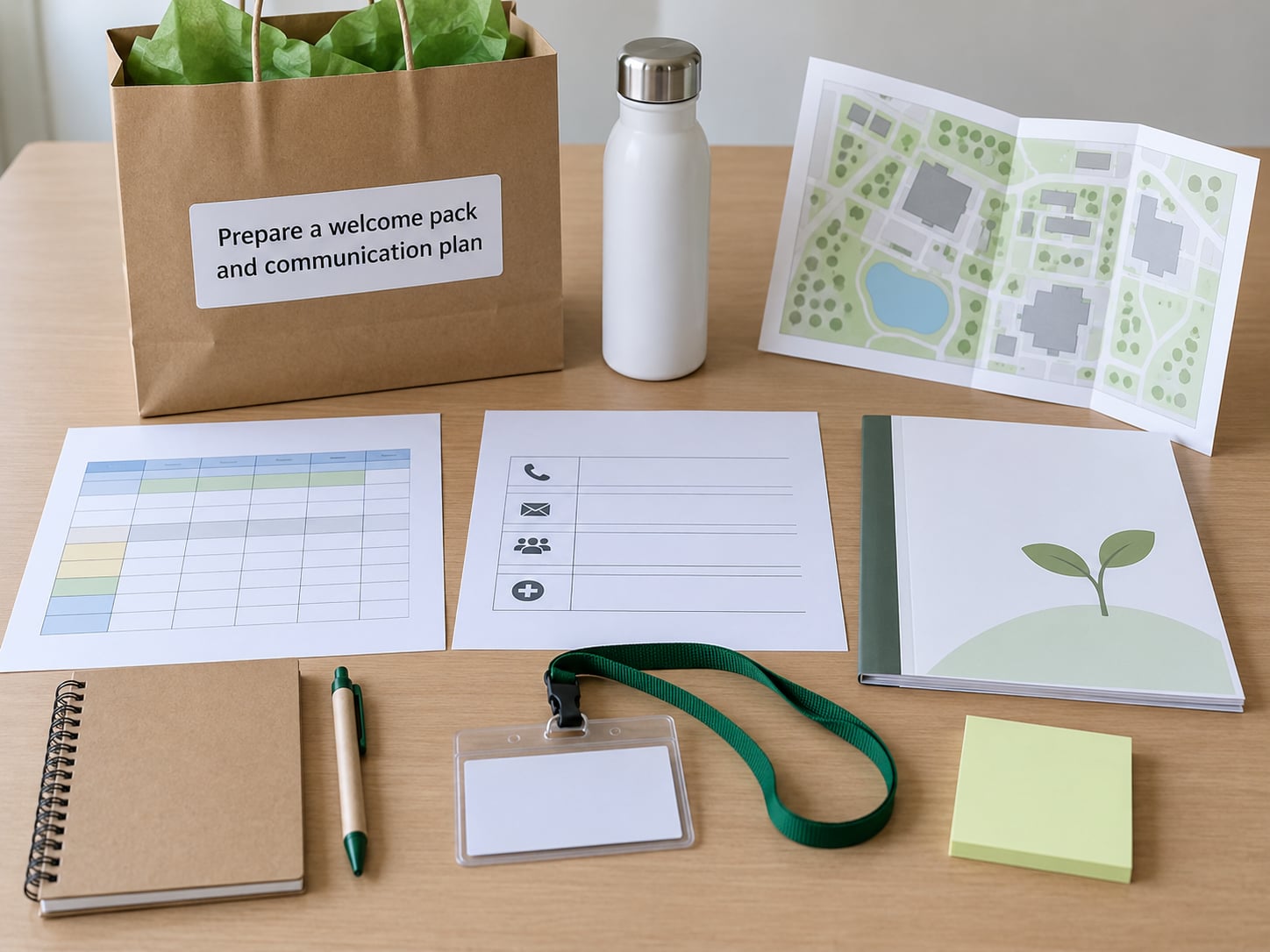
Volunteers want something they can hold onto and reread. A single page, printed or emailed, cuts repeat questions noticeably more than anything else you can add to the process.
The page needs: where to meet, what time to arrive, what to bring, who the supervisor is by name, the schedule for the next four weeks, the escalation contact, the accessibility details for the site, and the emergency procedure. Add the day-before reminder, a first-week check-in message, and a monthly update as standing calendar items rather than things you remember to send.
Sample welcome email:
Subject: Your first shift with us — Saturday 10am
Hi [name], we're glad you'll be with us. Meet at [location] at 9:45am, ask for [coordinator] at the welcome table. Bring a photo ID and wear closed shoes. [Supervisor] is your supervisor and will walk you through the route. Here's the map and your first four shifts.
Run a practical orientation session
Keep it to 75 minutes and give it a run of show, because an unstructured welcome turns into a lecture that volunteers forget by Tuesday.
- 0-10 min: Welcome, introductions, coffee, name badges.
- 10-20 min: Why the project exists, in plain language, including who benefits from the volunteer’s work.
- 20-35 min: The safeguarding policy, the confidentiality rule and the incident procedure.
- 35-55 min: Demonstrate one real task start to finish, using a live example.
- 55-70 min: Walk the site or share the map, show the restrooms and exits.
- 70-75 min: Questions, buddy introductions, schedule confirmation.
Repeat it on the same day each week, or run it as a cohort session twice a month. Batching means the information goes out once instead of every time somebody new joins.
Match volunteers to the right responsibilities
Match on three things: the skills they listed, what they said they want to get out of it, and the times they are actually free. Accessibility considerations are part of matching, not an accommodation you bolt on afterwards.
Then make the assignment legible to everyone else. Post the team list with names, roles and supervisors, and state in writing that the named supervisor is the single source of instructions for that volunteer. A large share of avoidable churn comes from a volunteer being given contradictory instructions depending on which shift they worked.
Give volunteers a safe first task and visible support
The first task should be real, small and finishable. Something like annotating twenty records against the agreed schema, or running one route and logging the readings, works better than shadowing someone for two hours with nothing to hold at the end.
Pair each new volunteer with a buddy or, if the team is small, with the coordinator, and give them a rule for the first five shifts: treat a volunteer as new until they have served five separate occasions. Attendance varies with weather, exams and life, so a shift count works better than a calendar probation period.
Pair shadowing with the written task sheet, and check understanding by asking the volunteer to walk you through the task back. Five minutes of that beats an hour of nodding.
First-shift no-shows are the most common complaint from small programs, and the fix is boring and effective: confirm the day before, ask for a phone number you can text, and have the buddy call within the hour rather than leaving the volunteer to wonder.
Collect feedback and improve the next volunteer onboarding cohort
Ask three questions after the first shift: what was unclear, what was missing, and would you tell a friend what this was like. Ask two more at the 30-day mark: do you know what to do next, and do you still want to do it.
Run a 30/60/90-day cadence. At 30 days, check task clarity. At 60 days, check support and workload. At 90 days, hand over to a fuller role or a second project, and mark the volunteer for recognition.
Track four numbers and nothing else: hours from application to first contribution, percentage who complete five shifts, 90-day retention, and reasons given at exit. If five people in a row mention the same gap, that is your next cohort’s curriculum.
Common Mistakes in Volunteer Onboarding
Treating orientation as a single session. One orientation leaves nobody to answer questions on shift three, which is exactly when people decide whether they fit. Follow it with a buddy and a check-in.
Skipping the written role description. If the role lives in the coordinator’s head, the volunteer learns it through correction. Write the one page and send it before the first shift.
Leaving paperwork until the day before. Waivers and checks can take days. Start screening at application, not at confirmation.
Using shadowing as the whole of training. Practitioners repeatedly flag it: shadowing builds confidence and leaves gaps. Pair it with a written task sheet and a demonstration.
No named point of contact. A shared inbox means nobody feels owned. Name one coordinator and one supervisor per volunteer, with their names on the welcome page.
Never closing the loop. If you ask for feedback and nothing changes, the second cohort answers honestly about that instead. Say what you changed and why.
A few more that come up often: batching onboarding in cohorts once you are taking more than three volunteers a month, so the session cost stays flat; keeping a spare kit on site for the volunteer who forgot their badge; and briefing whoever is on the door that greeters are the most valued first touch volunteers report, and should be genuinely pleased to see people rather than rushing them through.
Frequently Asked Questions
How long should a volunteer onboarding process take?
For most community and civic programs, two to three weeks from application to an independent first shift. A week covers the essentials: screening, paperwork and one orientation. Two to three weeks allows role-specific training across a few shifts. Month-long processes suit specialist roles needing credentials or equipment, and they lose volunteers. Batch sessions to keep the calendar moving.
What documents do volunteers need to sign?
A volunteer agreement covering role, hours and conduct, a liability waiver, a confidentiality agreement if volunteers handle unpublished or personal data, and a safeguarding acknowledgement when you work with children or vulnerable adults. Add an emergency contact form. Collect signatures electronically where you can, keep the records somewhere auditable, and tell volunteers what you keep and for how long.
How much does a volunteer background check cost, and can we do it for free?
It depends on scope and jurisdiction. Some national volunteer screening programmes, community safety schemes and local authority initiatives are free for community organizations, and several districts run volunteer ID cards at no charge. Commercial checks usually cost more and take several days to return. Check whether your role even requires one: it is usually only justified for work with children, vulnerable adults or unsupervised access.
What disqualifies someone from volunteering with us?
Write the list before you need it. Typical disqualifiers are an incomplete application, a failed or expired background check where one is required, an unresolved safeguarding concern, inability to meet the role’s stated time commitment, or conduct that breaches the volunteer agreement, including harassment of staff or other volunteers. Apply the same rubric to everyone and record the reason, so decisions stay defensible.
What is the difference between volunteer onboarding and volunteer training?
Onboarding covers the whole first weeks: application, screening, paperwork, welcome, expectations and support. Training covers the specific skills for a task, and happens once someone is already on the schedule. People often skip onboarding and jump straight to training, which leaves volunteers knowing the task but not the organization, their limits or who to ask. Sequence them: onboarding first, then training.
How do we measure whether volunteer onboarding is working?
Track four numbers: hours from application to first contribution, the share of new volunteers who complete five shifts, 90-day retention, and the reason given at exit when someone leaves. A low first-contribution time means screening is slow. A low five-shift completion means the first task or support is wrong. Pair the numbers with the three-question feedback form and review them once per cohort.
Conclusion
If you do one thing this week, write down the three roles you actually need and the name of the person who supervises each one. That single page is the foundation everything else sits on: the application, the orientation, the welcome pack and the first shift all point back to it. From there, run one welcome session a month, pair every new volunteer with a named contact, and ask three questions after their first shift. Onboarding works when it is repeated, not when it is improvised.