Congestion pricing works by charging drivers a fee for entering a busy area at busy times, so the price of a trip reflects how much it slows down everyone already there. That is how traffic congestion pricing works in practice: a city marks a zone, cameras read license plates as vehicles cross into it, the system matches each plate to a payment account, and the right peak or overnight rate is billed once for that day.
There are no toll booths and no cash lanes. Whether you pay depends on the zone, the hour, and your vehicle, which means the identical trip can cost nothing at midnight. Revenue is normally locked by law into a public purpose, usually transit capital, and that dedication is what separates congestion pricing from an ordinary tax.
Naming causes half the confusion. Cities shaped by British practice say congestion charging and congestion charge, so London, Stockholm and Milan use those words. US cities say congestion pricing, and New York calls its scheme the Congestion Relief Zone toll. Same mechanism, different vocabulary, which is why a London term and an NYC rule often end up in the same search query.
Table of Contents
- How Traffic Congestion Pricing Works
- What Traffic Congestion Pricing Charges For
- The Main Parts of a Congestion Pricing System
- How Cities Set the Charge
- How Vehicles Are Detected and Charged
- Who May Be Exempt or Charged Differently
- What Happens to the Money Collected
- Does Traffic Congestion Pricing Reduce Traffic?
- How Cities Handle Privacy, Equity, and Enforcement
- A Simple Example of a Citywide Charge
- Frequently Asked Questions
- Is congestion pricing the same as a regular road toll?
- Do I have to pay if I only drive through a congestion zone once?
- How do cities know which vehicle entered the zone?
- Are public buses and emergency vehicles charged?
- Does congestion pricing always reduce total city traffic?
- What can a city do with the money collected from congestion charges?
- Conclusion
How Traffic Congestion Pricing Works
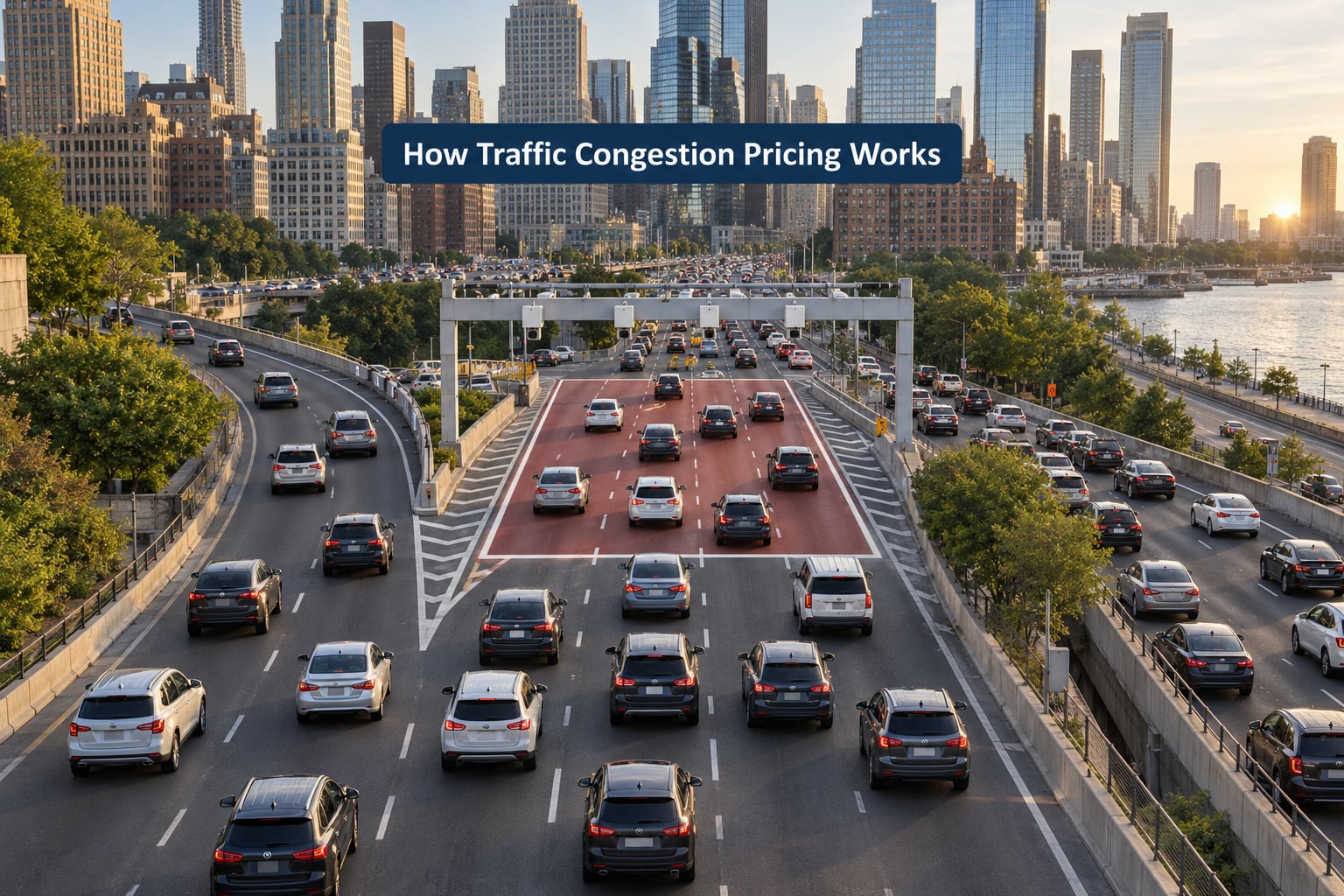
Think of it as a price signal rather than a payment. On a road with spare capacity, an extra car speeds away and the road clears itself. On a road at capacity, that same car slows everyone behind it, and the delay spreads well beyond the intersection where it happened. Pricing puts that hidden cost on the trip that causes it.
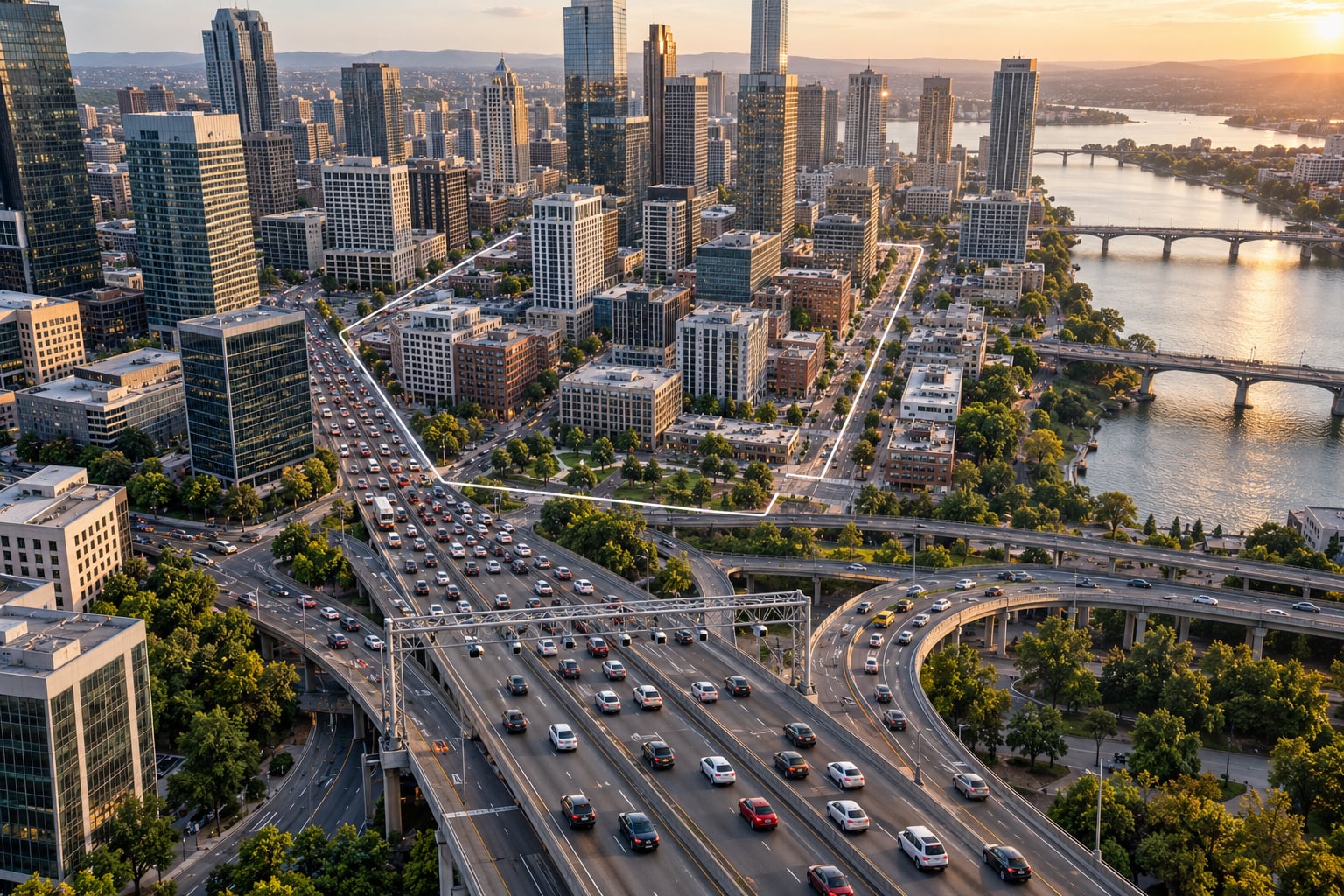
A cordon charge is the most common design, and the sequence runs in five steps:
- Define the zone and the hours. The city marks a boundary, usually a handful of bridges, tunnels and river crossings plus a line of detection points, and names the times that count as peak.
- Detect the crossing. Cameras at the boundary read the license plate of every vehicle passing. There is no stopping and no barrier.
- Classify the vehicle. The plate lookup tells the system whether it is a car, a motorcycle, a bus, a taxi, a truck or an exempt vehicle, which sets the rate or waives it.
- Apply the rate, the time window and any credits. The system decides whether the crossing was peak or overnight, checks for a daily cap on repeat crossings, and applies discounts such as tunnel crossing credits.
- Bill and dedicate. The charge lands on a transponder account, a toll-by-mail bill or a rideshare surcharge, and the money is spent under a legal restriction rather than folded into a general budget.
It differs from a road toll in three ways. A toll buys you passage on a specific piece of infrastructure, such as a bridge, and the price reflects that asset. A congestion charge is about demand at a time and place, so the price falls at off-peak hours on the same road. Parking and curb charges are a third thing: they price a space for a duration, not a trip through a zone.
What Traffic Congestion Pricing Charges For
The rate is not one number. Most schemes vary the charge along a handful of dimensions, and a city picks its combination deliberately.
- Location. The boundary itself matters. Some cities price only entry into the core, others price a wider area, others add congestion lanes on motorways alongside a central zone.
- Time of day. A two-tier peak and overnight schedule does most of the work. New York charges passenger cars nine dollars at peak and 2.25 dollars overnight with an E-ZPass, charged once per day.
- Live traffic conditions. Singapore’s Electronic Road Pricing varies the rate by measured road speed, so a charge rises exactly when a road slows. That is the closest thing to pricing the congestion itself in real time.
- Vehicle class. Cars pay the base rate; motorcycles, taxis, small trucks and large trucks sit in different tiers. A passenger car in New York pays nine dollars at peak, a motorcycle pays four dollars and 50 cents, and taxis and rideshare vehicles carry a per-trip surcharge instead.
- Direction. Entry-only charging is simpler and cheaper to run. Charging in both directions or charging for the exit is fairer for through-routes and harder to administer.
- Trip or mile. A cordon charge is per entry, not per mile, so it does not respond to how far you drive once inside. Distance-based or occupancy schemes do, at the cost of far more complex billing.
The Main Parts of a Congestion Pricing System
Strip away the politics and any congestion pricing scheme is the same seven-part machine. A city that changes one without the others tends to get disappointing results.
| Element | What it does | Why it matters |
|---|---|---|
| The charged area | A mapped zone with a defined boundary, including any roads excluded from it | Decides who is affected and where traffic will go instead |
| The pricing schedule | Peak and off-peak rates, vehicle class tiers, daily caps | Sets the strength of the signal and how much of the day is priced |
| Detection | Cameras, plate readers, gantries or in-vehicle tags at the boundary | Without reliable detection there is no charge and no data |
| Payment | Transponder account, plate-based billing, app, or a per-trip surcharge passed to riders | Decides whether drivers notice the charge at all |
| Exemptions and credits | Waivers by vehicle type, discounts by income, and credits for tolls paid elsewhere | The main political lever, and the main source of confusion |
| Enforcement | Penalty tier for unpaid charges, plus a dispute and appeal route | Turns a technical system into a bill people trust |
| Revenue use | A legal rule on where the money must go | Determines whether the policy survives its next election |
How Cities Set the Charge
The idea is older than most people assume. Economist William Vickrey set out peak-load pricing in 1952, and Singapore put a version of it into practice in 1975 with its Area Licensing Scheme, the first city to make paying to drive into a busy area routine. London followed in 2003 and expanded in 2007. Stockholm launched in 2006, Milan in 2012, Berlin’s environmental zone in 2008, and New York in January 2025.
Setting the number is the visible part of a much longer process. Cities model the zone first, usually to test how many drivers would change behaviour at different rates, and they are careful about what the model assumes. Then comes public consultation, which in some cities takes a year and in others three. Pilots or limited phases let a city test hardware and behaviour before a full rollout. Most schemes then phase the rate in rather than starting at the final number, and New York is the clearest current example: nine dollars at launch, a scheduled step to twelve dollars in 2028 and fifteen dollars in 2031, with the increase published in advance.
Publishing the escalation schedule matters as much as the first rate. Drivers and businesses can plan around a number they can see coming. They cannot plan around a number that moves with each budget season.
The hardest part of the process is the fairness trade-off. A rate high enough to change behaviour is a rate that some households feel every week. Cities answer that in three ways, sometimes together: discount programmes for low-income households, credits for charges already paid, and a commitment to reinvest the money where it is visible.
How Vehicles Are Detected and Charged
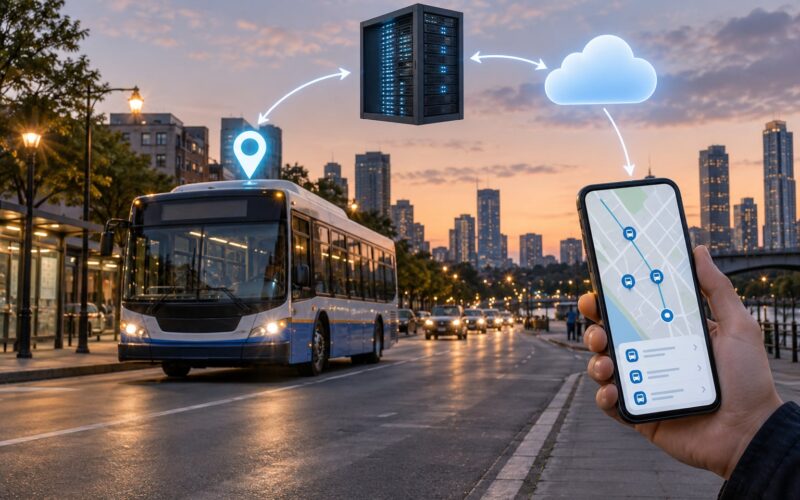
Detection is the part that makes the whole thing possible without toll booths. Cameras mounted on gantries, on posts or on existing infrastructure read plates as vehicles cross the boundary, usually at a few dozen points that cover every road into the zone. The plate is matched against a vehicle record to get the class and the owner, the crossing timestamp decides the time window, and the system either charges an existing account or creates a bill.
Payment usually runs in parallel lanes of its own. A transponder account settles automatically and at the standard rate. A plate-based bill goes to the registered owner, sometimes with a premium on top of the base charge. Ride-hail and taxi vehicles get a per-trip surcharge added to the fare, which is why a passenger can see the charge appear on a fare receipt rather than on a toll notice. A few cities also register vehicles in advance, which gives them a clean billing list at the cost of reaching drivers who never signed up.
Privacy is the part cities have to answer for, and the sensible position is narrow retention. A charging system needs the plate at the moment of crossing, a record of the charge, and a way to resolve a dispute. It does not need to store who travelled where, and cities that publish their retention rules in plain language tend to get less resistance than cities that do not. Aggregated, anonymised traffic data is often published as open data, which is genuinely useful for planners and developers, and that publication is where the privacy question turns from a risk into an opportunity.
Who May Be Exempt or Charged Differently
Almost every scheme has a list of exemptions, and the list is where the political argument concentrates. The usual categories are worth knowing before you drive into a zone.
- Emergency services. Ambulances, fire and police vehicles are exempt nearly everywhere. The reason is response time, not fairness.
- Public transport. Buses and trams are exempt in most cities, since the whole point of the charge is to push people toward transit rather than punish it.
- Certain commercial and school vehicles. Commuter and school buses, and in some cities delivery vehicles during a service window, are charged differently rather than fully exempt.
- Disability. A disability exemption or reduced rate is standard, usually on a separate application rather than automatic from the vehicle itself.
- Low-income discounts. A sliding scale or a partial rebate for qualifying households, which addresses the regressivity objection without giving up the signal entirely.
- Low-emission vehicles. Several cities offered reduced or zero rates for cleaner vehicles in their first years, then narrowed those carve-outs once the early adopters had bought something else.
- Taxi and rideshare. Instead of an exemption, a per-trip surcharge is added to the fare, so the cost lands on the passenger who caused the trip.
Crossing credits are a different mechanism and the one most worth understanding. If you pay a separate toll on a bridge or tunnel that leads into the priced zone, the amount can be credited against the congestion charge. New York applies credits for the Lincoln Tunnel, Holland Tunnel, Hugh L. Carey Tunnel and Queens-Midtown Tunnel tolls. For anyone whose route forces a toll and a zone entry, the credit is often the difference between a large bill and a small one.
Each exemption has a cost. Every carve-out weakens the price signal, and every carve-out means more categories to check at the boundary, which is where errors come from. Cities that pile on exemptions end up with a scheme that charges fewer people than the theory says it should.
What Happens to the Money Collected
Revenue use is not an afterthought in congestion pricing, it is a load-bearing part of the design. Most schemes restrict the money by law, and the destination is usually the same: transit capital. New York’s is dedicated to the MTA’s capital programme, and London’s net revenue goes into transport improvements.
Restricting the money is a political strategy as much as a fiscal one. The strongest objection to any congestion charge is that it is a tax on working people, and the strongest answer is a visible project list. A charge with a published project list turns an abstract loss into something a rider might use. A charge with a general fund destination gives opponents an easy message, because none has to be exaggerated to be effective.
Transparent reporting is what converts a promise into a fact. Cities that publish regular revenue and spending reports tend to keep the policy; cities that ask people to trust the commitment tend to have to defend it every budget cycle.
Does Traffic Congestion Pricing Reduce Traffic?
It reduces traffic in the place you charged, and the honest answer is that how much depends on the city and on how the scheme was built. Measured outcomes vary widely, so treat any single headline number with care and look for the definition behind it.
Three effects show up reliably. Traffic volume inside the zone falls, most sharply in the peak hours. Some trips move to off-peak times, which planners call peak spreading and which is a win for reliability even when total trips stay similar. And some trips go to transit, walking or cycling, though transit rarely absorbs the whole shift.
One effect shows up just as reliably, and it is the one residents notice first: displacement. Traffic that leaves the cordon often reappears on parallel avenues and residential streets just outside the boundary. New York responded by creating traffic mitigation zones on the streets just south of 60th Street, which is a policy built around the spillover rather than pretending it does not exist.
Air quality effects tend to be smaller than early advocates predicted, largely because newer vehicles emit less regardless of how many of them are on the road. The most defensible claim is narrower: a priced zone delivers a measurable reduction in peak vehicle volume inside the boundary, and what happens to the rest of the network depends on complementary measures like traffic mitigation, curb management and parking pricing.
So the useful question is not whether congestion pricing works. It is whether the city paired the charge with the tools that handle the traffic it moves. A cordon on its own manages the inside of the ring and exports the problem to the outside.
How Cities Handle Privacy, Equity, and Enforcement
Three concerns do most of the damage to public confidence, and each has a practical answer that a city can publish.
Surveillance. The worry is that plate readers become a general tracking network. The answer is retention limits, aggregated publication of the traffic data, and a clear statement that charge records are not available for unrelated enforcement. Cities that publish their data as open datasets, with the raw plates stripped out, tend to defuse the argument faster than cities that only issue assurances.
Getting the bill wrong. A surprising share of anger comes down to arithmetic rather than policy. A toll-by-mail bill arrives weeks after the trip, the line items are not labelled clearly, and the amount on the statement is higher than the published rate. The usual causes are a premium added for plate-based billing, more than one charge in a billing period where a daily cap should have applied, or a crossing credit that was not applied. A city that labels its bill lines properly removes most of this in one move.
Who it hits hardest. The fairest version of the objection is not about the rate. It is about shift workers, people with irregular hours and people whose job site sits in a transit desert, where a charge is a real cost and the suggested alternative does not run at six in the morning. A flat fee is regressive in the sense that its value falls as income rises. The mitigations exist and they are used: low-income discounts, crossing credits, and reinvestment in the transit that the policy is asking people to use. None of them solves the shift-worker case, which is the honest limit of every scheme that has tried.
Enforcement is where a scheme shows its character. Unpaid charges need a penalty tier that is real enough to matter and a dispute route that resolves in weeks rather than months. On forums, the loudest recurring complaints are about bill confusion and about the feeling of being fined for something the driver never knew applied, which is a service-design failure more than a policy failure.
A Simple Example of a Citywide Charge
Here is a weekday commute through a hypothetical priced zone, using the current New York structure as the model because the numbers are public and dated.
| Step | What happens | Result |
|---|---|---|
| 07:40, boundary approach | A camera reads the plate at a zone entry point | Plate, time and point of entry recorded |
| 07:40, classification | Plate lookup returns a passenger car with an active E-ZPass | Base rate applies |
| 07:40, window check | Crossing is inside weekday peak hours | Nine dollar peak rate |
| 07:55, tunnel credit | Route also used a tolled tunnel into the zone | Toll amount credited against the charge |
| 08:30, return trip | Car re-enters the zone the same day | Once-per-day cap, no second charge |
| Billing | E-ZPass account is settled automatically | One charge for the day, net of the credit |
| Revenue | Net proceeds are restricted to the transit capital plan | Money spent on a named project list |
Three details in that table do most of the work. The peak window converts a fixed price into a time choice, so a driver who can shift an hour pays the overnight rate instead. The once-per-day cap stops a multi-entry day from becoming a stack of charges. And the crossing credit means the charge does not fall twice on the same forced trip.
Now change the scenario. The same driver crosses at 22:30, the rate becomes 2.25 dollars, and the tunnel credit may reduce it further. Change the vehicle to a motorcycle and the peak rate becomes four dollars and 50 cents. Keep the driver on the expressway that runs through the district without an exit into the zone, and there is no charge at all, because expressways such as the FDR Drive and the West Side Highway are carved out of the zone itself.
Frequently Asked Questions
Is congestion pricing the same as a regular road toll?
No. A road toll charges you for using a specific piece of infrastructure, such as a bridge or tunnel, and the price reflects that asset. A congestion charge is a demand-management price: it varies by time of day, by vehicle class and by where you are going, so the same road costs less overnight than at rush hour. Parking and curb charges are different again, because they price a space for a duration rather than a trip through a zone.
Do I have to pay if I only drive through a congestion zone once?
Usually yes, but the rules you assume may not be the rules in force. Most zones charge per entry, so one crossing is one charge, and repeat crossings on the same day are often capped rather than charged again, as in New York where a passenger car pays once per day. The exceptions to check are your vehicle class, your payment method, and whether your route includes a tolled crossing that earns a credit against the charge.
How do cities know which vehicle entered the zone?
Cameras at the boundary read the license plate as each vehicle passes, and the system matches it to a vehicle record to get the class and registered owner. There are no toll booths and nothing to stop at. The crossing timestamp decides whether the peak or off-peak rate applies, and the charge is then settled through a transponder account, a plate-based bill, or a per-trip surcharge on a taxi or rideshare fare. Aggregation rules usually limit how long plate records are kept.
Are public buses and emergency vehicles charged?
Emergency vehicles are exempt almost everywhere, because the concern is response time rather than traffic. Public buses and trams are normally exempt as well, since the policy is trying to push people toward transit and it would be self-defeating to tax the alternative. Schools and commuter buses are usually charged differently rather than fully exempt, and taxis and rideshare vehicles pay a per-trip surcharge that is added to the passenger fare instead of being billed to the driver.
Does congestion pricing always reduce total city traffic?
No, and this is where most claims get overstated. It reliably reduces vehicle volume inside the priced zone, especially at peak hours, and it shifts some trips to off-peak times. What it does not reliably do is remove trips from the city: some of that traffic reappears on residential streets and avenues just outside the cordon, which is why traffic mitigation and curb management matter alongside the charge. Reduction figures differ widely between cities, so check what was measured before citing a number.
What can a city do with the money collected from congestion charges?
Most schemes restrict the revenue by law, and the usual destination is transit capital: station upgrades, accessibility work, bus lanes and fleet renewal. New York dedicates its proceeds to the MTA capital programme, and London directs net revenue to transport improvements. Some cities also return part of the money through low-income discounts, resident rebates or crossing credits. Publishing a regular revenue report matters as much as the commitment itself.
Conclusion
Congestion pricing puts a price on driving into a crowded place when that place is crowded. Cameras record the crossing, a vehicle record sets the rate, the time of day and any credits adjust it, and the money is legally committed to a public purpose. That is how traffic congestion pricing works end to end, and the rest is policy.
When you read any city’s proposal, check six things in this order: where the zone boundary sits and which roads are carved out, what the rate is at peak and overnight, who is exempt and who gets a credit, how the charge reaches the driver and what it costs to dispute, how unpaid charges are enforced, and what the revenue is legally required to fund. A scheme that answers those six clearly is usually a scheme that survives its first decade.